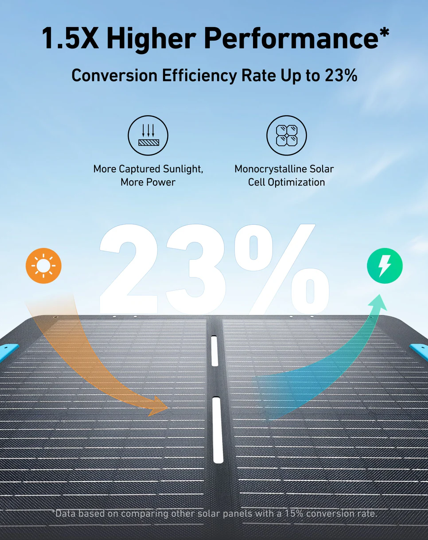
Portable solar panels play an important role in personal and household emergency readiness. When grid power becomes unavailable, renewable charging becomes more than a convenience—it becomes a lifeline. Portable solar power supports communication, lighting, navigation, and small medical devices, giving people stability during unexpected outages. Instead of relying entirely on backup batteries or fuel-based generators, users gain a steady way to recharge essential equipment whenever sunlight is available. The Anker SOLIX PS100 Portable Solar Panel strengthens this capability through 23% conversion efficiency, adjustable angles, waterproof durability, and a stable MC4 connection designed for dependable outdoor use. Understanding how portable solar panels influence emergency preparation helps people build more resilient, self-sustaining plans for crisis situations.
Core Ways Solar Power Enhances Emergency Preparedness
A Reliable Backup Energy Source Reduces Dependence on the Grid
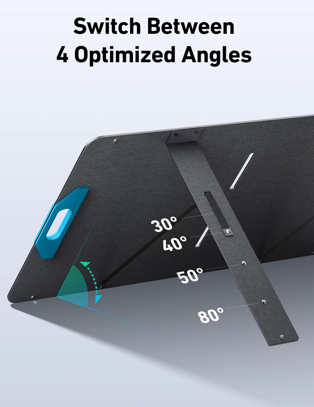
One of the most significant benefits of portable solar power is the ability to generate electricity independently. During storms, blackouts, or infrastructure failures, people often rely on battery banks that eventually run out. A portable panel provides a renewable source of energy that replenishes power stations, radios, and phones as long as there is sunlight. The PS100’s fold-and-go design makes it easy to deploy quickly during emergencies, even if users need to relocate or step outside temporarily. Its four tilt angles—30°, 40°, 50°, and 80°—help maximize sunlight throughout the day, ensuring that energy generation does not stall. This independence from unstable grid power brings reassurance and helps households maintain essential operations until normal conditions return.
Communication Devices Stay Functional Longer
During emergencies, communication is vital. Phones, radios, and GPS devices keep people in touch with authorities, family members, and rescue networks. When battery levels drop during a prolonged outage, anxiety rises. The portable solar panels help solve this by creating a dependable charging cycle. With its stable MC4 conductivity, the PS100 maintains consistent output, preventing interruptions while charging essential electronics. Even if users only collect sunlight in short intervals, the panel accumulates enough energy to support critical communication. This reliability matters most in situations where real-time updates, evacuation instructions, or weather alerts determine safety. Solar power ensures devices stay powered long enough to receive and send crucial information.
Emergency Lighting and Small Equipment Remain Usable
Light sources help people move safely at night, cook, read instructions, and avoid injury during outages. Portable solar panels support lanterns, flashlights, and small electronic tools by keeping backup batteries charged. The PS100’s ETFE-coated surface performs well outdoors even on rough ground, allowing users to set it up quickly without delicate handling. During nighttime emergencies, charged lighting equipment reduces risk and helps maintain a sense of calm. Solar power also supports small devices like air pumps, rechargeable radios, and compact medical tools, giving households a broader set of functional equipment during crises. This creates a more resilient emergency environment overall.
See also: Mobile Technology Security Challenges
How Portable Solar Panels Improve Crisis Response and Long-Term Readiness
Mobility and Lightweight Design Offer Power Wherever Users Go
Emergency situations sometimes require evacuation or movement to safer areas. Heavy or bulky power equipment slows people down, but lightweight panels offer mobility. The PS100 weighs just 4.4 kg (9.7 lb), so users can carry it to evacuation centers, campsites, or temporary shelters. Its foldable structure fits in vehicles or bags and deploys within seconds. This mobility ensures that power generation continues, even when people must move quickly or repeatedly. In contrast, stationary solutions become useless once users leave home. A mobile solar panel adds flexibility during unpredictable crisis conditions, allowing users to keep generating power wherever sunlight is available.
Weatherproof Protection Maintains Charging Capacity in Uncertain Conditions
Emergencies rarely occur under ideal weather. Rain, dust, humidity, or storm debris can interfere with charging equipment. Panels that lack strong protection may degrade or stop functioning when exposed to harsh conditions. The PS100 addresses this with an IP67 waterproof rating, allowing it to operate safely even when the environment becomes unstable. Its rugged ETFE coating resists scratches and damage, enabling the panel to stay functional throughout prolonged use. This means users can continue gathering power even during rough weather transitions, giving them an advantage when electricity is needed most. Weather resistance significantly increases the panel’s reliability in crisis preparation.
Renewable Energy Reduces the Need for Fuel, Batteries, or Grid Support
One of the hidden strengths of portable solar power is that it reduces the need to store excessive fuel or disposable batteries. These items are often scarce during emergencies and may run out quickly. Solar power removes that dependency by creating its own energy cycle. Once the PS100 is deployed, it continues converting sunlight regardless of supply chain conditions or shortages. Users who incorporate solar into their emergency kits build a sustainable loop: sunlight charges a power station, and the power station supports devices overnight. This renewable cycle offers stability long after traditional supplies become depleted.
Conclusion
Portable solar panels play a valuable role in strengthening emergency readiness by providing independent, renewable energy when grid power fails. They support communication, lighting, navigation, and essential tools by keeping devices charged through sunlight alone. The Anker SOLIX PS100 Portable Solar Panel enhances this capability with 23% efficiency, adjustable angles for better sun capture, waterproof durability, rugged ETFE coating, and stable MC4 connections. These features help users respond more effectively to outages, storms, or evacuations. As more households prepare for crisis situations, they recognize how portable solar panels create dependable, sustainable energy solutions that increase resilience and reduce uncertainty during emergencies.