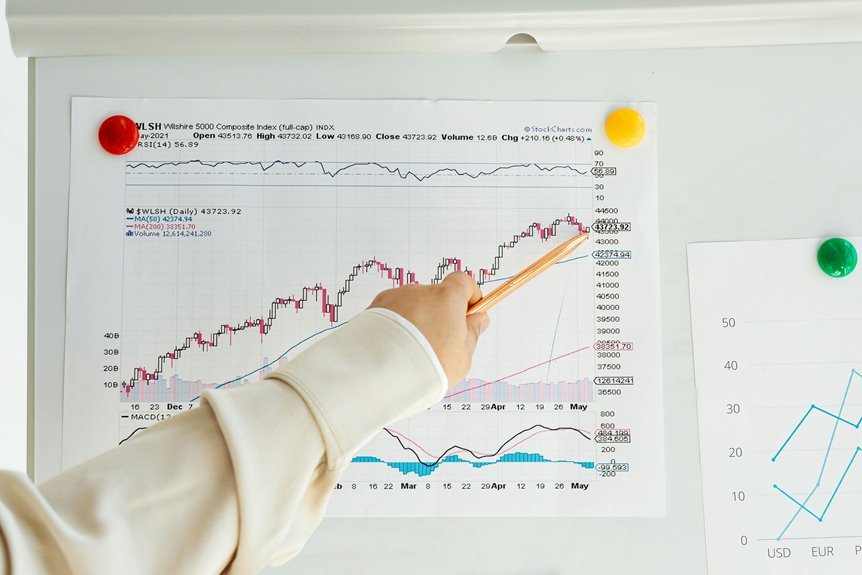
The Strategic Trend Calibration Index (STCI) serves as a critical framework for organizations navigating complex market dynamics. By integrating quantitative metrics with qualitative insights, it enables businesses to pinpoint significant market shifts. This analytical tool is particularly beneficial in sectors such as finance and retail. However, the nuances of its implementation and the breadth of its impact warrant further exploration, especially in a landscape marked by rapid change and competitive challenges.
Understanding the Strategic Trend Calibration Index
The Strategic Trend Calibration Index (STCI) serves as a vital analytical tool for organizations seeking to align their strategic initiatives with emerging market trends.
By employing strategic forecasting and trend analysis, the STCI enables firms to identify critical shifts in the marketplace.
This framework facilitates informed decision-making, empowering organizations to adapt proactively, ensuring resilience and competitiveness in an ever-evolving business landscape.
How the STCI Works
Utilizing a systematic approach, the Strategic Trend Calibration Index (STCI) integrates quantitative data analysis and qualitative assessments to evaluate market trends.
The STCI methodology employs rigorous trend analysis to identify significant patterns, allowing stakeholders to make informed decisions.
Benefits of Implementing the STCI
Implementing the Strategic Trend Calibration Index (STCI) offers numerous advantages for organizations seeking to navigate complex market environments.
It enhances cost efficiency by streamlining resource allocation and reducing waste.
Additionally, the STCI provides robust performance measurement tools that enable organizations to assess their strategic initiatives effectively.
This data-driven approach fosters informed decision-making, empowering businesses to adapt and thrive in dynamic markets.
Real-World Applications of the STCI
As organizations increasingly face volatile market conditions, the application of the Strategic Trend Calibration Index (STCI) becomes essential in various sectors.
Real-world examples include its use in finance for risk assessment and in retail for inventory optimization.
Industry applications demonstrate STCI’s capability to enhance strategic decision-making, allowing companies to adapt swiftly and effectively to changing market dynamics, promoting operational freedom and innovation.
Conclusion
In a world where businesses cling to outdated strategies in hopes of weathering market storms, the Strategic Trend Calibration Index emerges as a lighthouse—a beacon illuminating the treacherous waters of volatility. Ironically, those who dismiss its insights may find themselves sailing aimlessly, while the agile navigate confidently toward success. As the tides of change rise, the STCI proves that foresight, rather than blind optimism, is the true captain of enduring prosperity in the ever-shifting marketplace.